Nobody tells you that after fifty, the bumper-to-bumper warranty expires. The dealership closes. You are on your own, with a body that has been keeping score the entire time — and a bill that is now coming due in ways you did not fully anticipate.
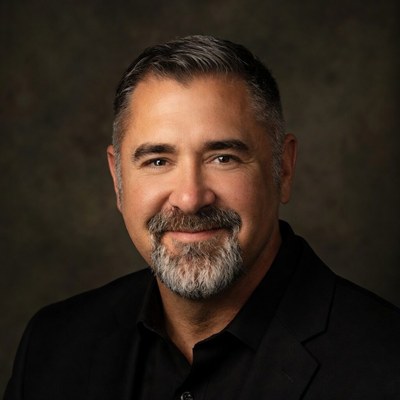
I know this personally. Heart failure. A descending aortic aneurysm sitting at 4.8 centimeters, managed with diuretics and pressure medications I take every morning without fail. Diabetes that arrived at fifty like an uninvited houseguest who never left. I have had the financial collapse, the loss of a partner, the nights during the pandemic when the walls closed in and the thoughts went places I am not afraid to name here. I have lived in Ohio and Miami, New York and Los Angeles, Denver and DC. I have eaten my way through Paris and Barcelona, walked the canals in Amsterdam, cycled through Provincetown on a Tuesday afternoon in October.
What I have learned — slowly, expensively, and with more urgency than I would like — is that longevity is not abstract. It is not a statistic that happens to other people. It is the accumulated consequence of thousands of decisions, most of them made when you were not thinking about consequences at all.
Here is what the research says actually moves the number. Not the wellness industry version. The honest version.
1. Cardiovascular health — the non-negotiable
Heart disease remains the leading cause of death in the United States. Full stop. The American Heart Association estimates that someone dies from cardiovascular disease every 34 seconds[1] in this country. It is not a niche concern. It is the main event.
When my cardiologist first explained what heart failure actually means — not that the heart stops, but that it is working inefficiently, struggling to keep up with demand — I understood for the first time that the body does not announce its decline. It accommodates. It compensates. It works around the damage quietly, for years, until the day it cannot.
“Cardiovascular disease is largely preventable. The risk factors are known. The interventions are available. What we lack is not knowledge — it is consistent application of what we already understand.”
— Dr. Donald Lloyd-Jones[2], President, American Heart Association; Chair of Preventive Medicine, Northwestern University Feinberg School of Medicine
Blood pressure. Cholesterol. Weight. Exercise. These are not suggestions. They are the variables that determine whether your heart lasts sixty years or ninety. If you have not had a cardiovascular workup recently, that is where you start. Not tomorrow. This week.
2. Smoking — still the single most preventable cause of death
The CDC reports that smoking causes more than 480,000 deaths[3] annually in the United States — more than alcohol, car accidents, firearms, and drug overdoses combined. It shortens life by an average of ten years. And yet it remains, in 2026, a choice that roughly one in nine American adults makes every day.
I am not here to lecture. People who smoke know the data. What the data cannot fully capture is the metabolic cascade that smoking triggers — the arterial inflammation, the oxygen displacement, the cellular aging that operates at a level invisible to the naked eye. If cardiovascular disease is the leading cause of death, smoking is one of its most reliable architects.
3. Diet — the one you keep negotiating with yourself about
I negotiated with food for decades. I am from Ohio, where a meal is not complete without something heavy, fried, or both. I ate my way through New York with genuine enthusiasm. I have had the best paella of my life in Valencia and the best croissant of my life on a Tuesday morning in Paris when I had nowhere to be.
And then diabetes arrived at fifty, and the negotiation ended.
A landmark 2023 study published in Nature Food found that a sustained shift toward a healthy dietary pattern — more whole foods, less processed everything — could extend life expectancy by up to ten years. Ten years. Not a rounding error. A decade.
The confusion around drugs like Ozempic and the GLP-1 class of medications is real and understandable. They work. The clinical evidence is substantial. But they are a tool, not a replacement for the underlying question: what are you actually putting in your body, and why? The drugs suppress appetite. They do not rewrite the relationship with food that got you there. That work is still yours to do.
4. Mental health — the one people still do not take seriously enough
During the pandemic, I had suicidal thoughts. I am saying that plainly because the silence around it costs lives. The CDC estimates that more than 12 million American adults seriously considered suicide in a single recent year. Depression is associated with a ten to twenty year reduction in life expectancy when untreated. Twenty years. That is not a mental health statistic. That is a longevity statistic.
Chronic psychological stress accelerates cellular aging at the level of telomere shortening — a finding from the research of Dr. Elizabeth Blackburn and Dr. Elissa Epel at UCSF, for which Blackburn received the Nobel Prize in Physiology or Medicine. The body does not distinguish between financial stress, grief, relational pain, and existential fear. It registers all of it as threat, and it ages accordingly.
I went through a financial collapse that took years to climb out of. I lost a partner. I rebuilt — slowly, imperfectly, one day at a time — without defining myself by what had fallen apart. That rebuilding is not separate from longevity. It is longevity. The research on post-traumatic growth, resilience, and purpose-driven living shows measurable physiological benefit. Meaning extends life. The absence of it does the opposite.
“There is no health without mental health. The two are inseparable — and treating them as separate has been one of medicine’s most costly errors.”
— Dr. Vivek Murthy, Former U.S. Surgeon General
5. Physical activity — not the version the fitness industry is selling
I am not talking about optimizing your VO2 max. I am talking about moving your body consistently, in whatever way you can manage, with whatever joints are cooperating that particular day.
The World Health Organization recommends 150 minutes of moderate-intensity[7] activity per week for adults. That is 21 minutes a day. A walk. A swim. A slow bike ride through a neighborhood you have never paid attention to before. The mortality benefit of meeting that threshold is significant and well-documented. The mortality cost of not meeting it is equally significant and equally well-documented.
After heart failure, after the aneurysm diagnosis, my relationship with exercise changed completely. It became less about performance and more about maintenance. Less about what my body could do and more about what I needed to do to keep it functioning. That shift in framing — from aspiration to stewardship — is, I suspect, available to anyone willing to make it.
6. Social connection — the one the data keeps confirming and people keep undervaluing
A meta-analysis of 148 studies involving more than 300,000 participants found that adequate social relationships were associated with a 50 percent increased likelihood of survival. That effect size is comparable to quitting smoking and larger than the effect of exercise, obesity, or air quality.
Loneliness kills. Not metaphorically. Physiologically. It elevates cortisol, disrupts sleep, suppresses immune function, and accelerates cardiovascular disease. Former U.S. Surgeon General Dr. Vivek Murthy declared loneliness[6] a public health epidemic in 2023 — not because the feeling is new, but because its biological consequences are now impossible to ignore.
I have lived in cities where nobody knows your name and cities where everybody does. I have been in rooms full of people and felt completely alone. The research does not care about quantity. It cares about quality — whether the connections in your life feel genuine, reciprocal, and safe. If they do not, that is worth addressing with the same urgency you would bring to a blood pressure reading.
7. Sleep — the quiet multiplier
We covered this in depth in The Sleep-Longevity Connection. The short version: fewer than seven hours a night is associated with significantly elevated mortality risk across virtually every cause of death studied. It is not optional. It is infrastructure.
8. Preventive care — the appointment you keep rescheduling
My aortic aneurysm was found because someone was looking. A routine imaging study, ordered during a workup for something else, revealed a finding that changed how I manage my health every single day. If nobody had been looking, I would not have known. And not knowing, in that particular case, would eventually have been catastrophic.
The U.S. Preventive Services Task Force publishes evidence-based screening recommendations for adults. They are not suggestions. They are the result of extensive systematic review. Annual physicals, lipid panels, blood pressure monitoring, colorectal cancer screening, abdominal aortic aneurysm screening for men over 65 who have ever smoked — these interventions exist because catching things early is categorically different from catching them late.
The honest summary
Getting old is not for the faint of heart. I mean that literally. The cardiovascular system, the metabolic system, the neurological system — they all require more deliberate maintenance as the decades accumulate. The margins for error narrow. The consequences of neglect compound.
But here is what I have also learned: the factors that extend life are largely the same factors that make the years worth living. Movement. Connection. Sleep. Food that actually nourishes you. Mental health taken as seriously as physical health. Meaning — some reason to get up in the morning that is bigger than the morning itself.
Learning to enjoy each day, each step, the sunshine on an aging face — that is not a consolation prize. That is, according to the research, one of the most effective longevity interventions available. Purpose and positive affect are associated with measurably longer life. The science caught up to what people who have been through something already knew.
You do not have to define yourself by what has fallen apart. The number that matters is not your age. It is what you do with what is still working.
- 1. American Heart Association. Heart Disease and Stroke Statistics — 2024 Update https://www.heart.org/en/about-us/heart-and-stroke-association-statistics
- 2. Lloyd-Jones DM et al.. Life's Essential 8 — Updating and Enhancing the American Heart Association's Construct of Cardiovascular Health. Circulation, 2022. https://www.ahajournals.org/doi/10.1161/CIR.0000000000001078
- 3. CDC. Smoking and Tobacco Use — Health Effects https://www.cdc.gov/tobacco/data_statistics/fact_sheets/health_effects/
- 4. Shan Z et al.. Association Between Healthy Eating Patterns and Risk of Cardiovascular Disease. Nature Food, 2023. https://www.nature.com/articles/s43016-023-00774-5
- 5. Blackburn E, Epel E. The Telomere Effect: A Revolutionary Approach to Living Younger, Healthier, Longer. Grand Central Publishing, 2017. https://www.ucsf.edu/news/2017/01/405531/telomere-pioneer-elizabeth-blackburn-on-how-to-live-longer-healthier-life
- 6. Murthy VH. Our Epidemic of Loneliness and Isolation. U.S. Surgeon General Advisory, 2023. https://www.hhs.gov/surgeongeneral/reports-and-publications/social-connection/index.html
- 7. CDC. Physical Activity Guidelines for Americans https://www.cdc.gov/physicalactivity/basics/adults/index.htm
- 8. USPSTF. Preventive Services Task Force Recommendations https://www.uspreventiveservicestaskforce.org/uspstf/recommendation-topics
- 9. Kessler RC et al.. Prevalence and Treatment of Mental Disorders, 1990 to 2003. NEJM, 2005. https://www.nejm.org/doi/full/10.1056/nejmsa043266