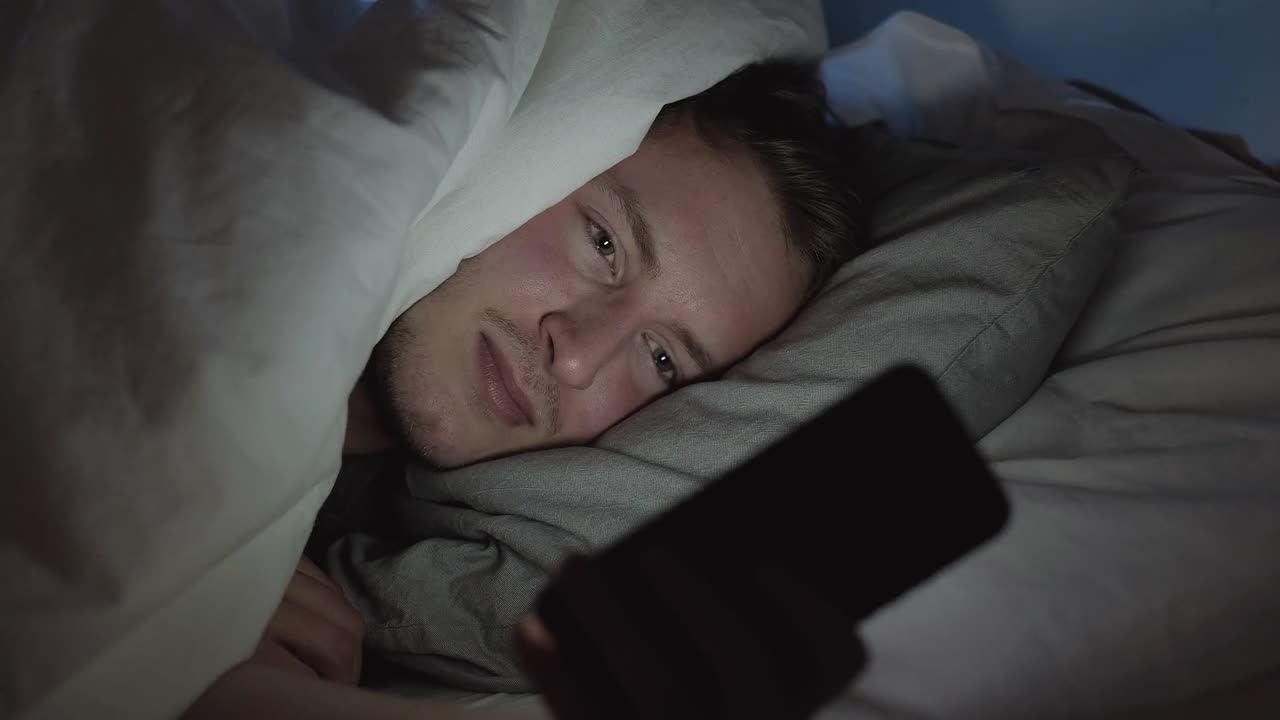

The strongest predictor of all-cause mortality in adults under 65 isn’t smoking. It isn’t BMI. It isn’t even exercise. Increasingly, the research points to something most of us have been quietly sacrificing for years: sleep duration.
I am not a morning person by nature. I’ve spent most of my adult life treating sleep as a negotiable variable — something to compress when a deadline pressed or a project demanded one more hour. A lot of us have. The culture has a word for this posture: hustle. What it doesn’t advertise is the bill that eventually comes due.
The science of sleep and longevity has clarified considerably in the last decade, and what it shows is not ambiguous. Chronic short sleep — defined as consistently fewer than seven hours a night — is associated with a significantly elevated risk of dying earlier, from almost every cause studied. That’s not a peripheral finding. It’s the headline.
What the data actually shows
The American Academy of Sleep Medicine and the Sleep Research Society jointly recommend that adults sleep seven or more hours per night[1] on a regular basis to promote optimal health. That recommendation is grounded in a large and growing body of evidence linking short sleep duration to a range of serious outcomes: obesity, diabetes, hypertension, cardiovascular disease, and premature death.
A landmark 2010 meta-analysis published in Sleep examined data from more than 1.3 million participants[2] across 16 studies. It found that sleeping fewer than six hours per night was associated with a 12 percent increase in all-cause mortality. Sleeping more than nine hours was associated with a 30 percent increase — suggesting that both extremes carry risk, and that the optimal range is meaningful and measurable.
“Sleep is the single most effective thing we can do to reset our brain and body health each day — Mother Nature’s best effort yet at immortality.”
— Dr. Matthew Walker, Professor of Neuroscience and Psychology, UC Berkeley; author of Why We Sleep
Dr. Walker’s work at UC Berkeley has been central to shifting how researchers and clinicians think about sleep — not as passive rest but as an active, essential biological process. When you sleep, your brain is running a maintenance cycle. Metabolic waste products are cleared. Memories are consolidated. Hormonal systems are regulated. Immune function is reinforced. Cut the cycle short, and all of those processes are left unfinished.
What happens to your body when you don’t sleep enough
The physiological consequences of chronic sleep deprivation are well-documented and extend far beyond feeling tired. The CDC reports that adults who sleep fewer than seven hours a night are more likely to report chronic health conditions including heart attack, coronary heart disease, stroke, asthma, COPD, cancer, arthritis, depression, and kidney disease compared to adults who sleep seven or more hours.
That list is striking not because of its length, but because of its breadth. Sleep deprivation doesn’t attack one system. It degrades all of them simultaneously.
Here’s what the biology looks like in practice:
Cardiovascular system: Short sleep raises blood pressure and increases sympathetic nervous system activity — the “fight or flight” response — for longer periods than intended. Over time, this sustained activation damages arterial walls and increases the risk of cardiac events. A 2019 study in Scientific Reports found that sleeping six hours or fewer was associated with a 27 percent increased risk of atherosclerosis compared to those sleeping seven to eight hours.
Metabolic system: A single week of restricted sleep measurably impairs insulin sensitivity. The body’s ability to regulate blood glucose declines, and appetite-regulating hormones shift in ways that promote overconsumption. Ghrelin, which signals hunger, increases. Leptin, which signals fullness, decreases. The result is that sleep-deprived people tend to eat more and store it less efficiently.
Immune system: Researchers at UCSF found that people who slept fewer than six hours a night were four times more likely to catch a cold[5] after exposure to the rhinovirus than those who slept seven hours or more. Sleep isn’t just restorative. It’s immunologically active.
Brain health: The glymphatic system — the brain’s waste-clearance mechanism — operates primarily during sleep. It flushes out metabolic byproducts including beta-amyloid[6], the protein that accumulates in the brains of people with Alzheimer’s disease. Chronic sleep deprivation accelerates this accumulation. A 2017 study published in Nature Communications found that even a single night of sleep deprivation significantly increased beta-amyloid buildup in the brain.
The sleep debt myth
One of the most persistent pieces of folk wisdom about sleep is that you can make it up on weekends. Sleep in Saturday, recover Sunday, and start Monday fresh. The research doesn’t support this.
A 2019 study in Current Biology[7] followed three groups of adults: those who slept 9 hours a night, those who slept 5 hours a night, and those who slept 5 hours on weekdays and were allowed unlimited sleep on weekends. The groups sleeping 5 hours gained weight, showed metabolic disruption, and had impaired insulin sensitivity. The weekend recovery group improved on some measures — but not all. And when they returned to restricted sleep, their performance declined faster than the original restricted-sleep group, suggesting that irregular patterns may cause their own form of damage.
The conclusion, stated plainly: there is no biological mechanism for fully repaying sleep debt. The goal is consistent adequacy, not periodic splurging.
How much is enough
Seven to nine hours per night for most adults. This is not a soft recommendation. It is the consensus position of the American Academy of Sleep Medicine, the Sleep Research Society, the CDC, and the National Sleep Foundation, grounded in decades of epidemiological data.
Individual variation exists. Some people — genuinely — function optimally on slightly less. These individuals are rare, and most people who believe they’re one of them are simply acclimatized to impairment. Dr. Walker estimates that people who can truly thrive on six hours of sleep represent fewer than 3 percent of the population, and the genetic variant associated with this trait is vanishingly uncommon.
The more practically useful question isn’t how little you need. It’s whether you’re consistently getting seven hours, and what happens if you’re not.
What actually works
Sleep hygiene is a phrase that has been so thoroughly absorbed into wellness culture that it’s started to feel meaningless. It isn’t. The interventions are specific and they work. Here are the ones with the strongest evidence behind them:
Consistent wake time. Going to bed at the same time every night matters less than waking up at the same time every morning. Your circadian rhythm is anchored by light exposure and wake time. Irregular wake schedules disrupt this anchor and make falling asleep harder. Pick a wake time and hold it — including weekends.
Light management. Bright light in the morning advances your circadian clock and makes it easier to fall asleep at night. Bright light in the evening — especially blue-spectrum light from screens — delays it. The behavioral change here is simple: get outside in the morning, dim your environment in the hour before sleep.
Temperature. Core body temperature needs to drop about one to two degrees Fahrenheit to initiate sleep. A cooler room — somewhere in the range of 65 to 68 degrees Fahrenheit for most people — facilitates this drop. A hot shower before bed also works, paradoxically: it draws blood to the skin’s surface and accelerates the core temperature decline when you step out.
Alcohol. Alcohol is a sedative, not a sleep aid. It helps people fall asleep but disrupts sleep architecture in the second half of the night, suppressing REM sleep and increasing wakefulness. The net effect of regular alcohol use is lighter, more fragmented sleep that feels less restorative. This is not a moral argument. It’s a mechanical one.
Sleep apnea screening. Undiagnosed obstructive sleep apnea is one of the most common reasons people feel perpetually unrefreshed regardless of hours slept. It affects an estimated 30 million Americans, the majority of whom are undiagnosed. If you snore, wake frequently, or feel unrested despite adequate hours, ask your doctor about a sleep study. It is a straightforward, often life-changing intervention.
Sleep and your longevity estimate
Sleep duration is one of the 33 factors we assess in the Life Expectancy Calculator — specifically because its mortality signal is strong and consistent across the actuarial and public health literature. Sleeping fewer than six hours a night carries a measurable downward adjustment in our composite estimate. Sleeping seven to eight hours carries a modest positive adjustment. This isn’t a reward system. It’s a reflection of what the data shows.
If sleep is a factor you’ve been neglecting, it may be worth understanding exactly what that’s costing you — and what it might be worth to change.
- 1. American Academy of Sleep Medicine & Sleep Research Society. Consensus Statement — Recommended Amount of Sleep for a Healthy Adult. Sleep, 2015. https://aasm.org/resources/pdf/pressroom/adult-sleep-duration-consensus.pdf
- 2. Cappuccio FP et al.. Sleep Duration and All-Cause Mortality: A Systematic Review and Meta-Analysis. Sleep, 2010. https://academic.oup.com/sleep/article/33/5/585/2454478
- 3. Walker MP. Why We Sleep: Unlocking the Power of Sleep and Dreams. Scribner, 2017. https://www.simonandschuster.com/books/Why-We-Sleep/Matthew-Walker/9781501144325
- 4. CDC. Sleep and Sleep Disorders — Adults https://www.cdc.gov/sleep/about_sleep/how_much_sleep.html
- 5. Prather AA et al.. Behaviorally Assessed Sleep and Susceptibility to the Common Cold. Sleep, 2015. https://academic.oup.com/sleep/article/38/9/1353/2417971
- 6. Shokri-Kojori E et al.. β-Amyloid Accumulation in the Human Brain After One Night of Sleep Deprivation. PNAS, 2017. https://www.pnas.org/doi/10.1073/pnas.1721694115
- 7. Depner CM et al.. Ad libitum Weekend Recovery Sleep Fails to Prevent Metabolic Dysregulation. Current Biology, 2019. https://www.cell.com/current-biology/fulltext/S0960-9822(19)30098-3
- 8. Leproult R, Van Cauter E. Effect of 1 Week of Sleep Restriction on Testosterone Levels. JAMA, 2011. https://jamanetwork.com/journals/jama/fullarticle/1029127